

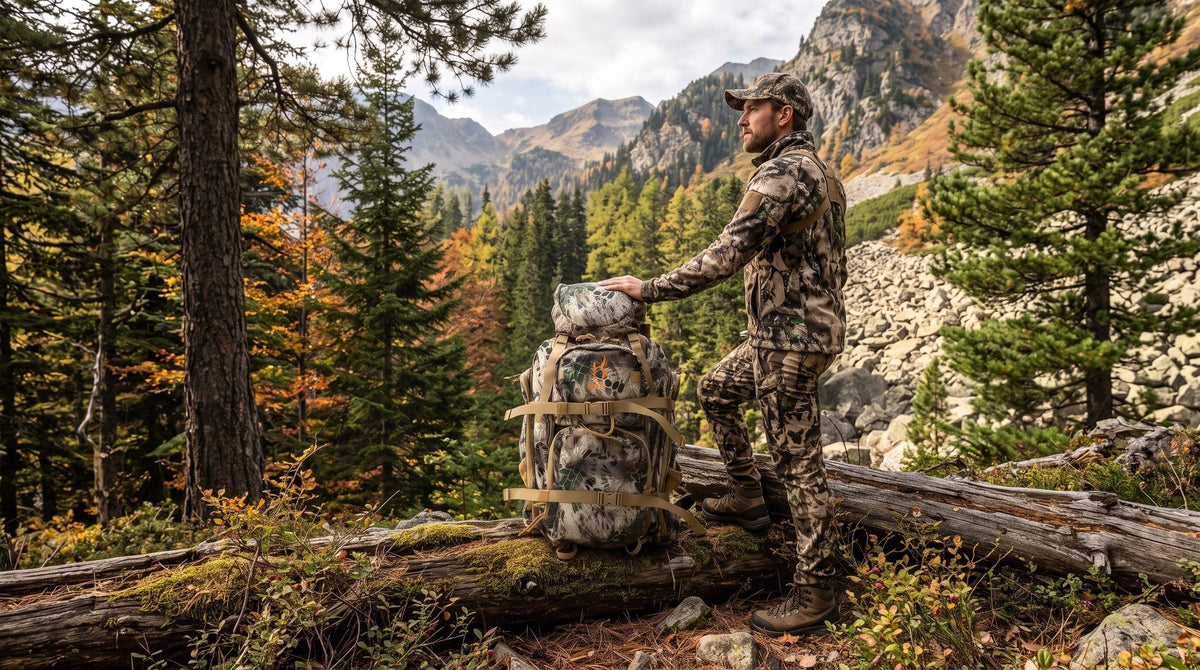
In our field tests through tangled oak brush and up loose shale ridges, our design crew has learned a hard truth: a hunt rarely falls apart because of changing weather or rough terrain. It falls apart because of gear friction—stiff fabric that loudly swishes against brush within 36.5 m (40 yards) of a bedding buck, a rifle that monopolizes your hands during a technical climb, or a pack that buckles when you load 31.8 kg (70 lb) of fresh quarters. Dialing in the right hunting backpack with frame from the start makes all the difference between a spine-punishing ordeal and an unforgettable pack-out.

As summer shifts toward crisp late-summer mornings and early autumn, your gear strategy has to shift with it. Scouting trips turn into archery openers, followed quickly by high-stakes rifle seasons. During this transition, no piece of gear carries more responsibility than what is strapped to your shoulders.
From our experience in the hills, hunters shouldn't have to carry a lightweight pack for scouting and a completely different, clumsy frame just to haul meat. You need a unified system: a rig that stays compact on the stalk, glides silently through dense timber, and expands into a rock-solid meat hauler backpack the moment you punch your tag.
1. Trip Length & Dynamic Capacity: Why Fixed-Volume Packs Get in Your Way
One of the most common compromises we see in the woods is committing to a pack built for only one stage of the hunt.
If you carry a massive, rigid 70 L pack on a quick morning stalk, you feel like you're hauling an empty plastic drum through the timber. It catches overhead branches, catches high ridgeline wind, and throws off your natural balance when side-hilling. On the flip side, running a featherlight 30 L frameless daypack makes the hike in easy, but leaves you stranded the moment an animal hits the dirt 4.8 km (3 miles) deep in a dark canyon. Without rigid structure, stuffing heavy fresh meat into a soft bag rounds it out like a bowling ball—pulling backward away from your spine and dumping 100% of that dead weight directly onto your collarbones.

The practical solution is dynamic capacity.
During early-season scouting and single-day hunts, your pack should compress down flat to roughly 40 L to 45 L. In this low-profile setup, it holds your optics, water reservoir, lightweight insulation, tags, and field-dressing knives tight against your spine without extra fabric flapping around.
When work begins on the ground, that same system must expand. For example, when our team engineered the Traverseon 65.5L Camo Tactical Hunting Backpack, we built it to stay compact at roughly 41 L on the hike in, while opening up to 65.5 L when meat bags or bulky cold-weather layers need to come back out. This dynamic capacity gives you an agile daypack on the approach and a self-reliant hauler for the trip home.
2. Internal Frame vs. External Frame: Finding Balance in the Timber
When hunters evaluate different hunting packs, the debate inevitably lands on frame structure: do you want an internal frame, an external frame, or a frameless daypack?
| Field Performance Metric | Traditional External Frame | Ultralight Frameless Daypack | Internal Aluminum Frame (Traverseon) |
|---|---|---|---|
| Max Structural Load | Extremely Heavy (45+ kg / 100+ lb) | Light (< 13.6 kg / 30 lb) | Heavy-Duty (Up to 40 kg / 88 lb) |
| Brush Clearance | Poor (Tubing catches deadfall) | Excellent (Sleek and nimble) | High (Hugs natural torso contours) |
| Mechanical Noise | Moderate/High (Pins & joints creak) | Silent (Fabric only) | Ultra-Quiet (Cushioned aluminum stays) |
| Weight Transfer | Rigid transfer to hips | Collapses backward onto shoulders | Direct transfer to hips via pelvic wrap |
| Best Field Application | Two-track road meat hauling | Quick glassing scouting walks | Full Hunt Cycle (Stalk to Heavy Haul) |
While traditional external frames can haul tremendous weight on flat logging roads, they are an absolute headache in thick timber. Their wide tubing snags low branches, and the metal pins creak every time your torso flexes while climbing. Frameless packs are quiet and featherlight, but load them past 13.6 kg (30 lb) and the lack of structure forces your upper shoulders to do all the work.
An internal frame hunting backpack strikes the balance experienced hunters look for. By contouring aircraft-grade aluminum stays inside the pack body, it delivers the vertical backbone needed to drive 30 kg to 40 kg (66 lb to 88 lb) directly down into a padded hip belt. At the same time, it keeps a low-profile silhouette that moves naturally with your body, allowing you to slip through blowdowns and crawl through oak brush without catching limbs.
3. What Truly Defines a Meat Hauler Backpack?
Not every pack with heavy webbing deserves to be called a meat hauler. Tossing fresh, warm game quarters directly into your main gear compartment creates two massive problems that every veteran hunter avoids:
- Gear Contamination: Blood, tallow, and moisture seep through fabrics, ruining dry down layers, sleeping bags, and trail rations.
- The "Water Bucket" Lever Effect: When heavy meat sags backward toward the bottom and outside of a standard pack, it acts like a long lever pulling on your lower back. Think of carrying a heavy 20 kg (44 lb) water jug: hug it tight against your chest, and you can walk for miles; hold that same jug just 15 cm (6 in) away from your ribs, and your lower back seizes, your core shakes, and your knees take punishing strain on every downhill step.
❌ Standard Pack (Sagging Meat Lever)
Meat sinks toward the bottom rear of the bag → Pulls mass backward away from your spine → Multiplies strain on the lumbar spine and knee joints on every downward step.
✅ Dedicated Meat Shelf (Clamped to Frame)
Meat locked directly over internal aluminum stays → Forces mass into your native pelvic gravity line → Zero rearward torque, natural upright posture, and balanced downhill descent.
A purpose-built meat hauler backpack solves this through an external expandable meat shelf placed directly between the internal aluminum frame and the main dry storage bag.

On the Traverseon 65.5L Camo Tactical Pack, this space unzips to open a dedicated hauling bay. Game bags sit completely isolated from your clean gear, keeping food and clothing dry and fresh. More importantly, heavy-duty compression straps allow you to cinch up to 40 kg (88 lb) of meat flat against the aluminum stays. By locking that mass straight over your pelvic center of gravity, you eliminate the sway and rear drag that turn loose downhill descents into fall hazards.
4. Moving Silently: Ultra-Quiet 800D Fabric vs. Standard Synthetic Swish
In brush and timber country, stealth is measured in decibels long before you ever find a shooting lane.
Many standard military and mountaineering packs use stiff, hard-faced nylon fabrics. While tough, that slick surface rubs against dry brush, lodgepole limbs, and scrub oak like sandpaper. The result is a sharp, high-pitched synthetic scratching sound—the exact kind of unnatural noise that sends whitetail bucks and bull elk bolting from their beds 40 yards away.
During prototyping, our crew tested dozens of textile finishes to balance snag resistance with quiet movement. We settled on a proprietary ultra-quiet 800D hunting fabric:
- Acoustic-Dampening Brushed Surface: A micro-brushed finish softens the fabric face, deadening contact sounds when branches or sleeves rub against the pack.
- Heavy-Duty Tear Resistance: The dense 800D polyester core shrugs off sharp shale, thorny briars, and jagged deadfall without fraying or puncturing.
- Signature Woodland Camo: Breaks up artificial silhouettes in shifting forest light without the glossy glare common on lower-grade synthetic bags.
5. Hands-Free Travel: Secure Bow and Rifle Transport
Whether you are balancing with trekking poles, working through deadfall, or side-hilling across loose shale, holding a rifle or compound bow in your hand over miles of backwoods terrain drains upper-body energy and creates dangerous fall hazards.

A well-designed field pack needs an integrated weapon-carry system that stays rock-solid on the move:
- Lower Support Boot: A reinforced drop-down boot cradles the buttstock of your rifle or the lower cam of your bow, ensuring the weapon cannot slide through or drop.
- Dual Retention Straps: Upper bar-tacked compression straps lock the barrel or bow riser tight into the center channel, keeping the weapon aligned directly over the pack's aluminum spine and eliminating side-to-side swing.
- Quick, Quiet Access: Buckles release quickly and smoothly without noisy hook-and-loop ripping sounds, so you can unlimber your weapon silently when a stalk develops fast.
6. Weather Preparedness, Hydration, and Layout
Mountain weather turns fast: morning frost gives way to mid-day heat, followed by sudden afternoon downpours. A dependable field pack handles both changing weather and physical output through practical design:
- Water Resistance & Built-In Rain Cover: Any heavy-load hauler with multiple zippers and bar-tacked stress points can experience seam weeping under hours of driving mountain rain. The honest approach combines water-resistant 800D shell fabric for light drizzle and morning brush dew with a built-in high-density rain cover stowed in a dedicated bottom pocket for torrential squalls.
- Internal Hydration Routing: Hauling heavy weight burns water fast. An integrated water bladder compartment with dedicated hose routing lets you sip continuously without breaking stride or unclipping your waist belt.
- Field-Ready Organization: Zippered hip-belt pockets keep wind-checker powder and rangefinders right at your fingertips, while deep stretch side pockets secure trekking poles and water bottles for zero-stop access.
7. The All-Season Field Checklist: From Scouting to Heavy Pack-Out
Use this load layout to balance weight distribution, gear cleanliness, and immediate trail accessibility:
| Storage Location | Pack Contents | Packing Strategy |
|---|---|---|
| Main Bag (Clean Core) | Puffy jacket, ultralight emergency tarp, first aid kit, headlamp, water filter, high-calorie food | Keep dry and compressed; pack heavy items closest to the aluminum frame |
| Waist Belt & Exterior Pockets | Rangefinder, binoculars, wind-check powder, state hunting tags/license, GPS communicator | Instant one-handed access on the move without dropping your pack |
| Meat-Hauling Bay (Stowed) | 4 to 5 breathable synthetic game bags, nitrile gloves, field knife, paracord, bone saw | Kept grouped together for immediate deployment the moment game is down |
| External Frame Lashings | Unloaded rifle or compound bow secured in carrier boot; trekking poles strapped to side webbing | Maintains centered gravity; keeps both hands free for climbing balance |
Frequently Asked Questions (FAQs)
Do I really need a framed hunting backpack for day hunts?
If there is any chance you will harvest game miles from your truck, absolutely. While a frameless daypack is light on the way in, it is incapable of carrying a 30 kg to 40 kg (66 lb to 88 lb) quartered load without collapsing onto your shoulders. An internal frame hunting backpack keeps your setup agile while stalking, but gives you the load-bearing spine you need the moment game is on the ground.
What size hunting pack is best for all-around use?
An expandable pack scaling between 40 L and 65.5 L is the sweet spot for big game hunting. It cinches down neat and flat for single-day scouting, then expands outward to accept game bags and bulky cold-weather insulation for the pack-out.
What is the real difference between a hiking backpack and a hunting pack?
Standard hiking bags are built for uniform camping gear. Their fabrics swish loudly against brush, and they lack weapon carriers or external meat shelves—meaning bloody game quarters must be shoved directly into your clean gear compartment. Dedicated hunting packs feature ultra-quiet textiles, heavy-duty bar-tacked webbing, and isolated meat compartments engineered for heavy biological loads.

Trust Your System, Go Further
Whenever our crew packs up after weeks of mountain testing and heads back to the design table, we are reminded of one simple truth: you cannot control the weather, the rut, or the steepness of the terrain. The only variable you can truly control is the gear strapped to your spine. A great hunting pack should never feel like dead weight you are dragging into the hills; it should feel like an extension of your own frame—quiet on the stalk, reliable under punishment, and ready when the real work begins.

We engineered the Traverseon 65.5L Camo Tactical Hunting Backpack & Meat Hauler from the ground up to handle that exact journey—built with a quiet aluminum stay, an expandable 40 kg (88 lb) meat shelf, and our ultra-quiet 800D fabric.
Ready for the 2026 Season?
Built with an internal aluminum frame, 40 kg (88 lb) heavy pack-out rating, and quiet 800D fabric. Move silently on the stalk and haul heavy on the pack-out.
View the Traverseon Tactical Pack →Wherever your tags take you this season, trust your gear, respect the trail, and go further, every season.
Field Safety & Compliance Notes
- Firearm Safety Notice: Always confirm that firearms are completely unloaded with the action cleared and the muzzle pointed in a safe direction before mounting them into the pack's carrier boot and tightening compression straps.
- Hunter Orange Requirements: The integrated blaze-orange visibility flag provides auxiliary field identification during pack-outs. It does not replace state-mandated hunter-orange or blaze-pink clothing requirements. Always consult current local fish and wildlife regulations.
- Maximum Structural Capacity: The 40 kg (88 lb) specification indicates the pack's engineered structural load limit. Carrying comfort varies based on torso adjustment, personal conditioning, and load distribution. Always build up pack weight progressively.
Share:
How to Choose a Hunting Backpack with Frame: The 2026 Guide to Internal Frames & Meat Haulers