

Load video:

Premium Down Warmth. Solo or Double Comfort.

Built for cold nights and flexible sleep setups.
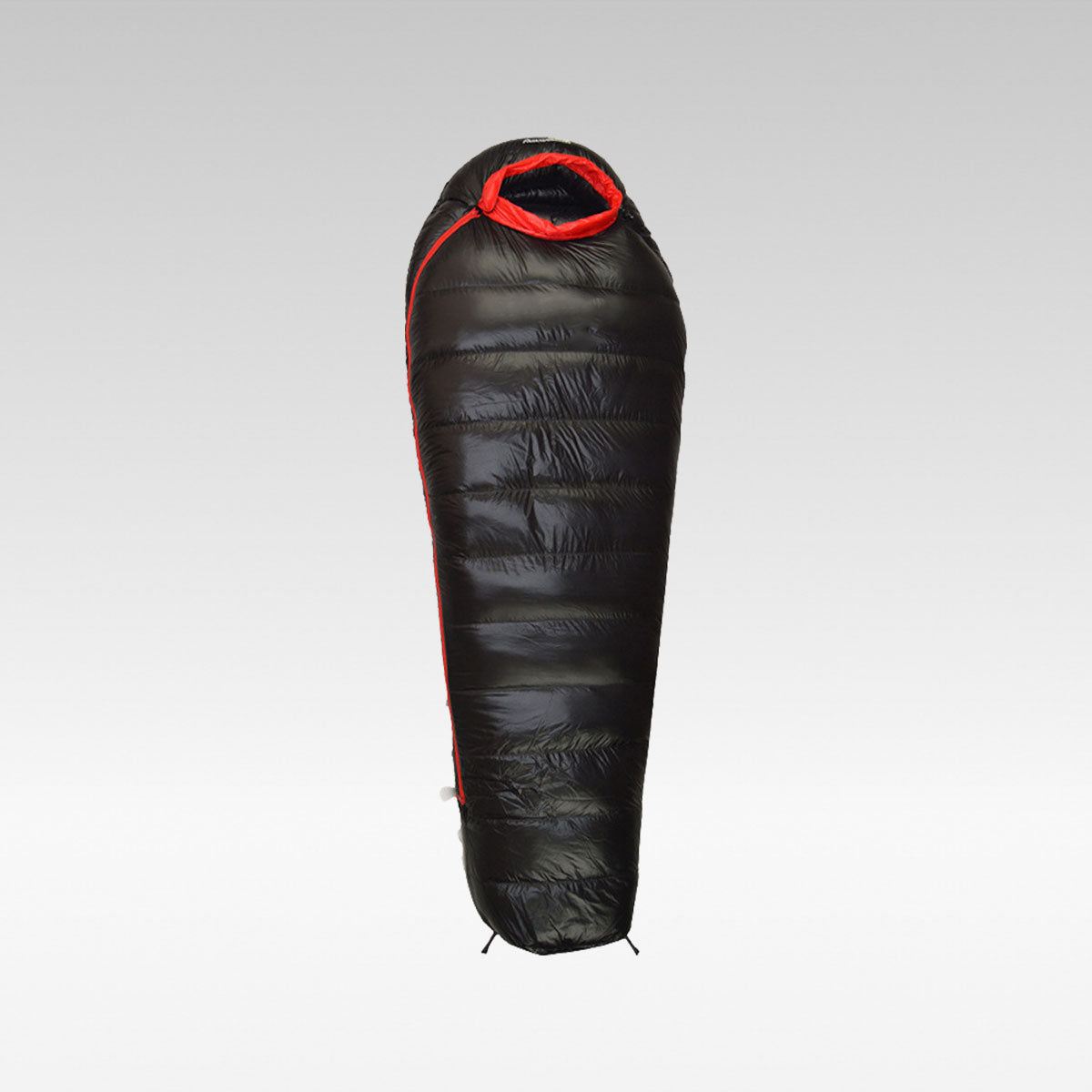
The Traverseon Down Mummy Sleeping Bag uses premium goose and duck down for exceptional warmth with minimal bulk, rated from +15°C to −13°C.

Its mummy shape, adjustable hood, and dual-track YKK zipper block cold drafts, while the convertible design lets two bags zip together for spacious double comfort. Lightweight, compressible, and roomy for taller sleepers, it’s ideal for camping, backpacking, and alpine adventures.

Light to carry. Warm to share. Ready for the cold.

Product details

Description

Five Fill Options, Better Warmth for Every Camp Night

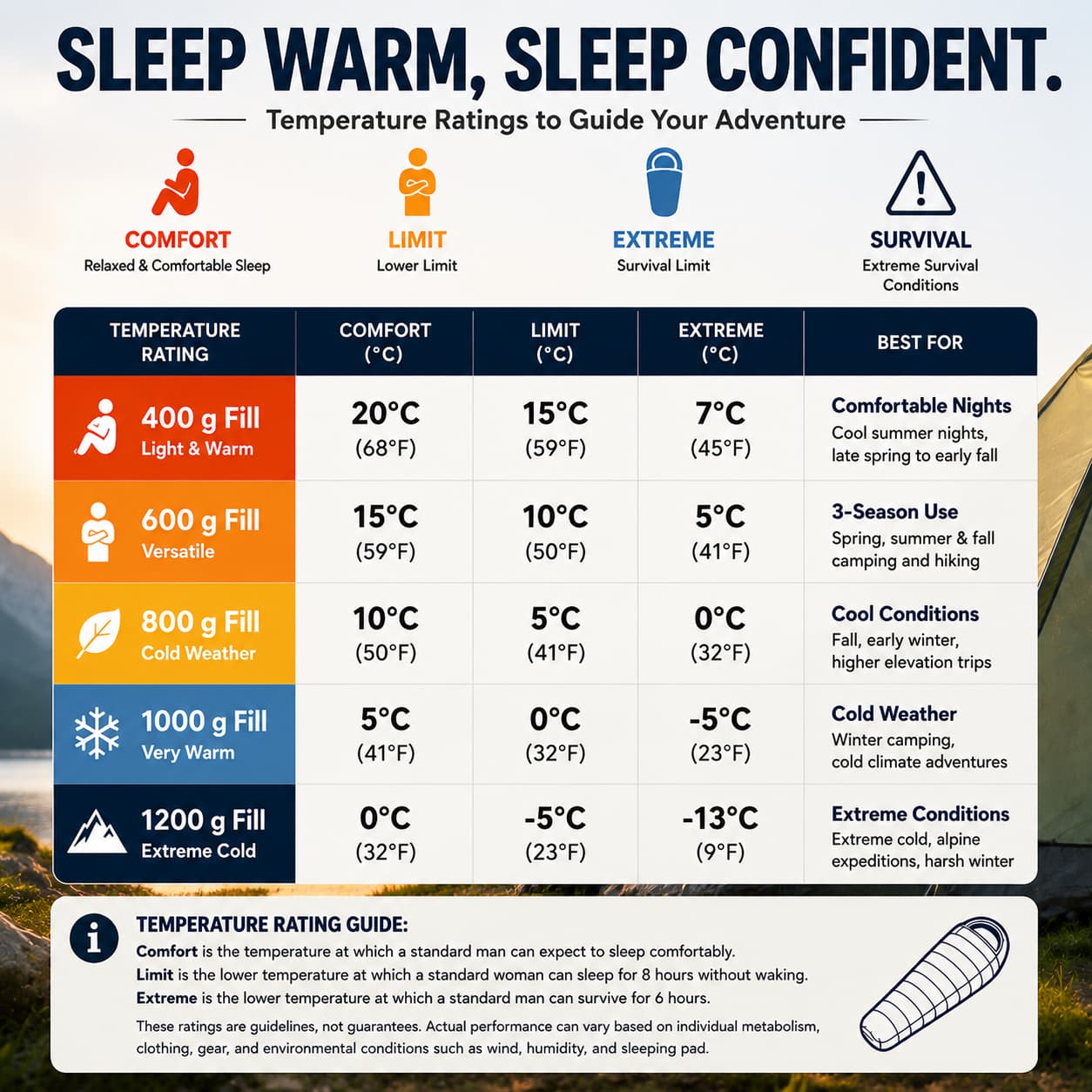
This down mummy sleeping bag comes in five fill weights—400 g, 600 g, 800 g, 1000 g, and 1200 g—so you can balance warmth, packed weight, and the conditions of each trip. The corresponding comfort-temperature references are 20°C, 15°C, 10°C, 5°C, and 0°C (68°F, 59°F, 50°F, 41°F, and 32°F), with a laboratory extreme-limit reference down to −13°C (9°F). From lightweight summer camping and cool-weather backpacking to car camping near freezing, each option gives you a more practical level of insulation for the night ahead.

Measuring 210 × 80 × 50 cm (82.7 × 31.5 × 19.7 in), the roomier mummy shape maintains a close, heat-efficient profile while leaving more natural space through the shoulders, legs, and foot area. Depending on the selected fill weight, the sleeping bag weighs approximately 0.85–1.65 kg (1.87–3.64 lb) and compresses to about 18 × 21 cm through 21 × 29 cm (7.1 × 8.3 in through 8.3 × 11.4 in), making it easier to pack for backpacking, weekend camping, hunting camps, or road trips. An adjustable hood, draft-blocking structure, and full-length zipper help reduce heat loss around the head, neck, and zipper area, while the water-resistant shell helps handle dew and light moisture. Available colors include Red, Dark Blue, Black, Lake Blue, Wine Red, Orange-Yellow, Gray, Army Green, and Blue.

Functions
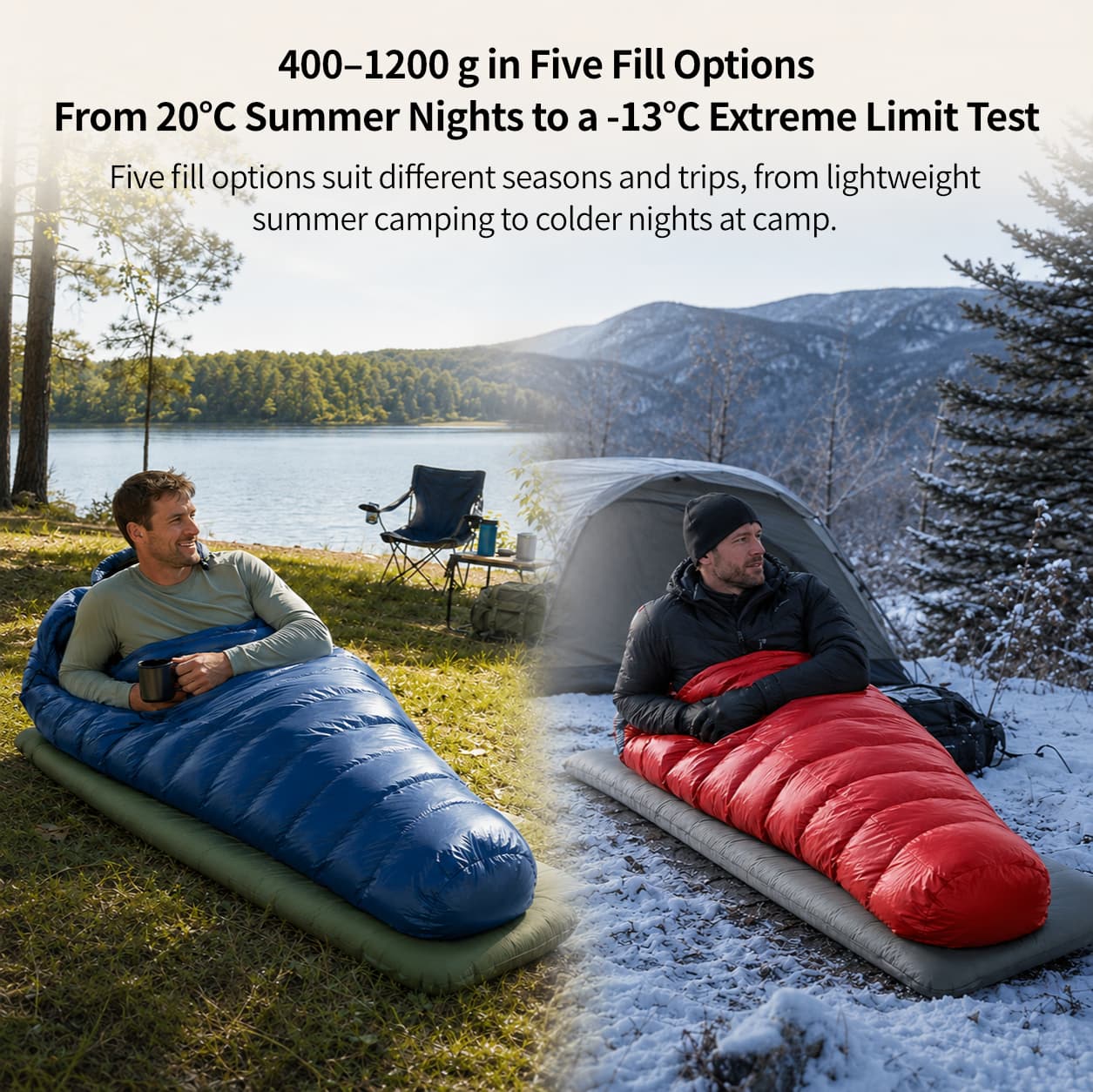
  • 400–1200 g in Five Fill Options, From 20°C (68°F) Summer Nights to a −13°C (9°F) Extreme Limit Test
    From warm summer nights at 20°C (68°F) to cold camps at −5°C (23°F), five fill options make it easier to choose the right level of warmth for each season, with extreme low-temperature testing reaching down to −13°C (9°F). Lighter options suit summer hiking and mild spring or fall weekends, while higher-fill versions bring added warmth to near-freezing car camps, hunting trips, and base-camp nights.
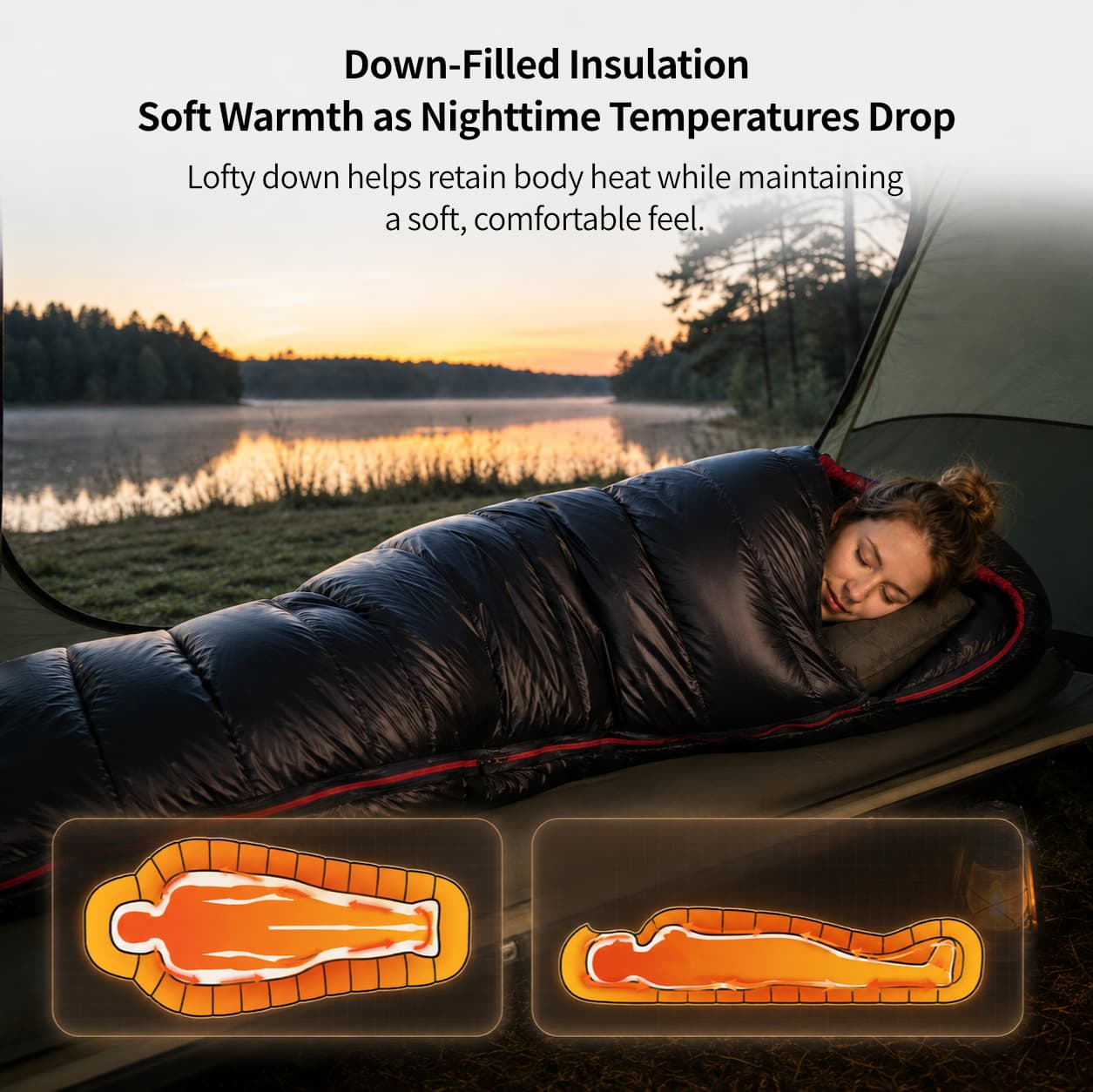
  • Down-Filled Insulation, Soft Warmth as Nighttime Temperatures Drop
    Down insulation creates a soft, lofty layer around the body that helps retain warmth throughout the night. When lakeside air turns cool, fall temperatures drop after sunset, or the tent begins to chill before dawn, the sleeping bag keeps you gently wrapped without the stiff, heavy feel of bulky insulation.
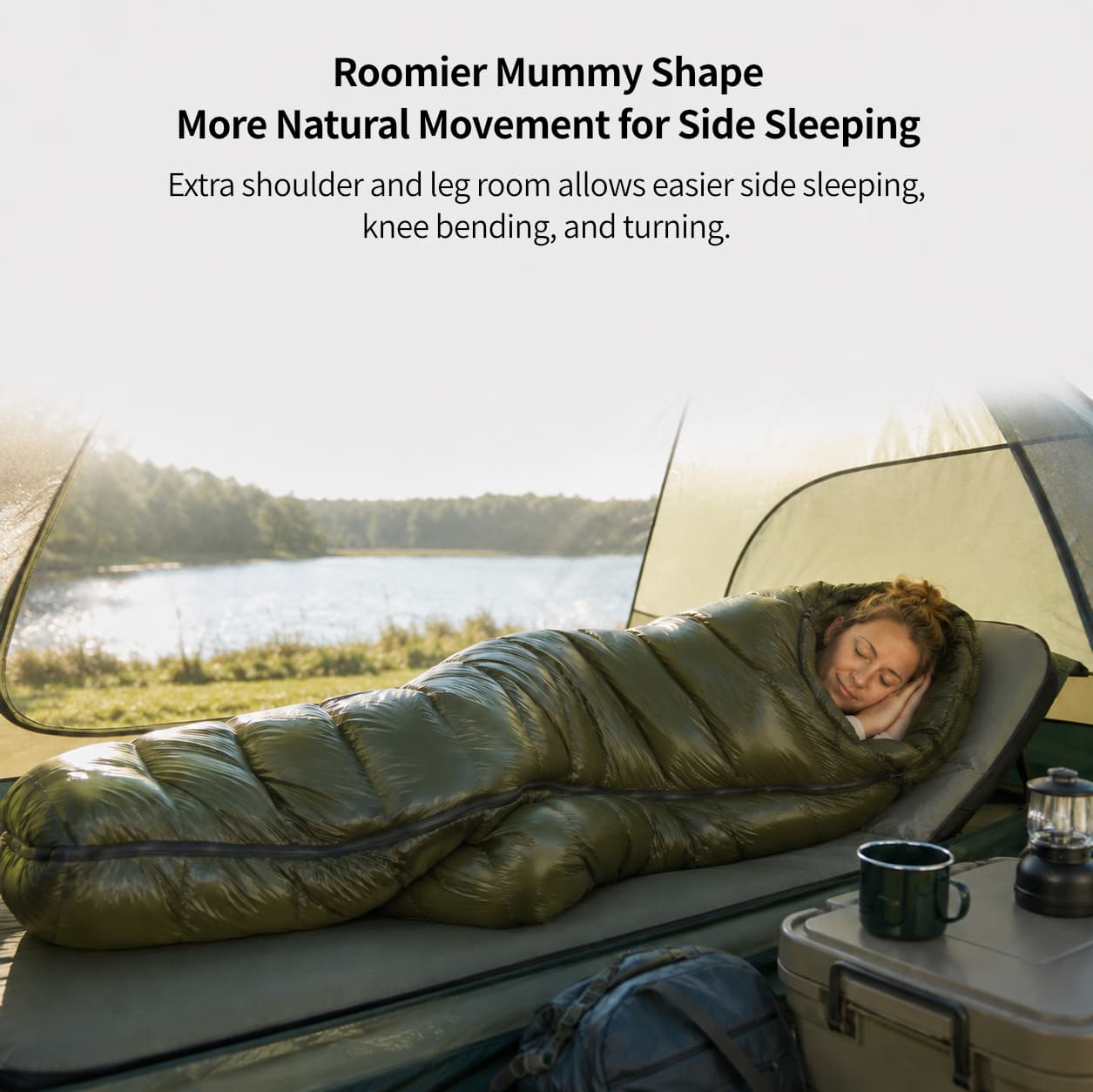
  • Roomier Mummy Shape, More Natural Movement for Side Sleeping
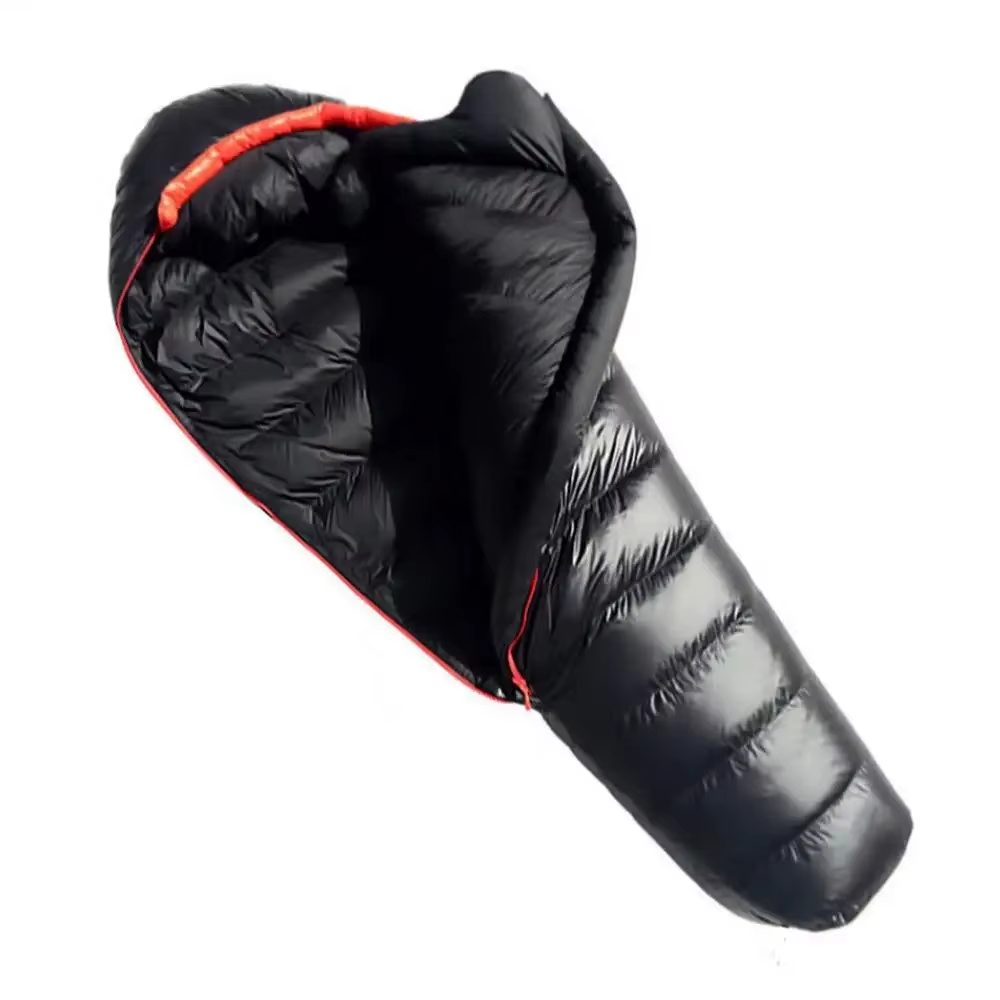
    The 210 × 80 × 50 cm (82.7 × 31.5 × 19.7 in) mummy profile leaves more natural room through the shoulders and legs while tapering toward the feet to reduce unused space. Side sleeping, bending your knees, and changing positions feel less restrictive than inside a tightly cut traditional mummy bag.
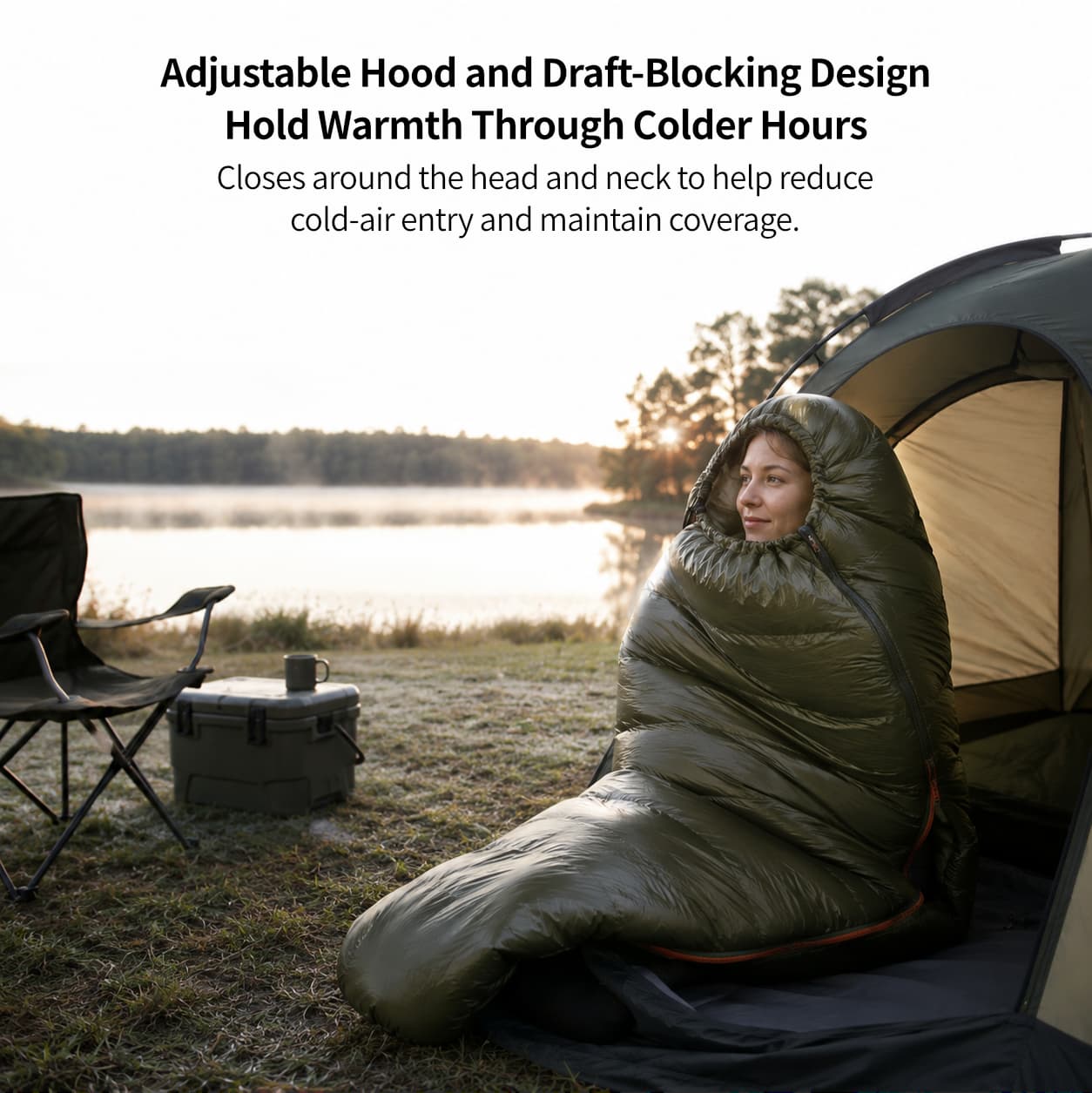
  • Adjustable Hood and Draft-Blocking Design, Hold Warmth Through Colder Hours
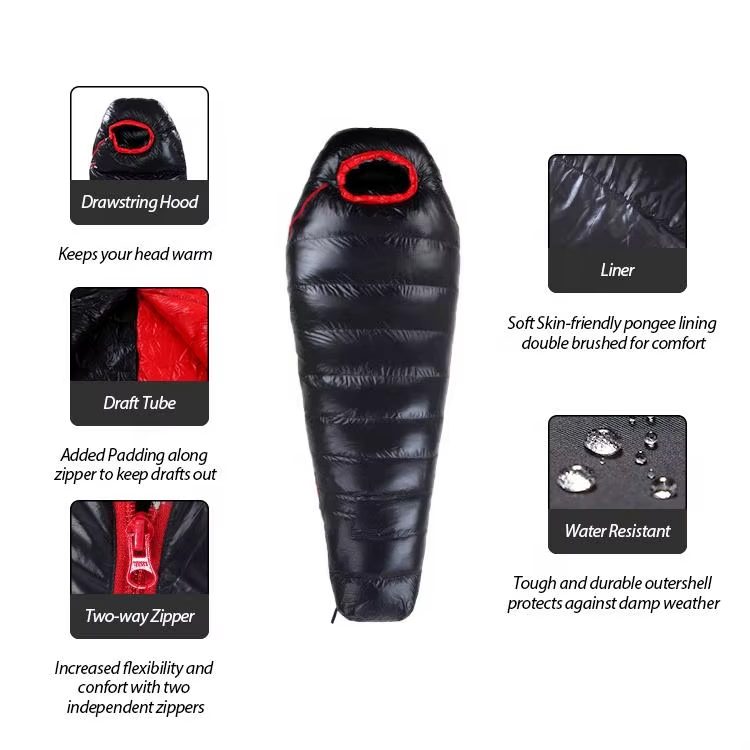
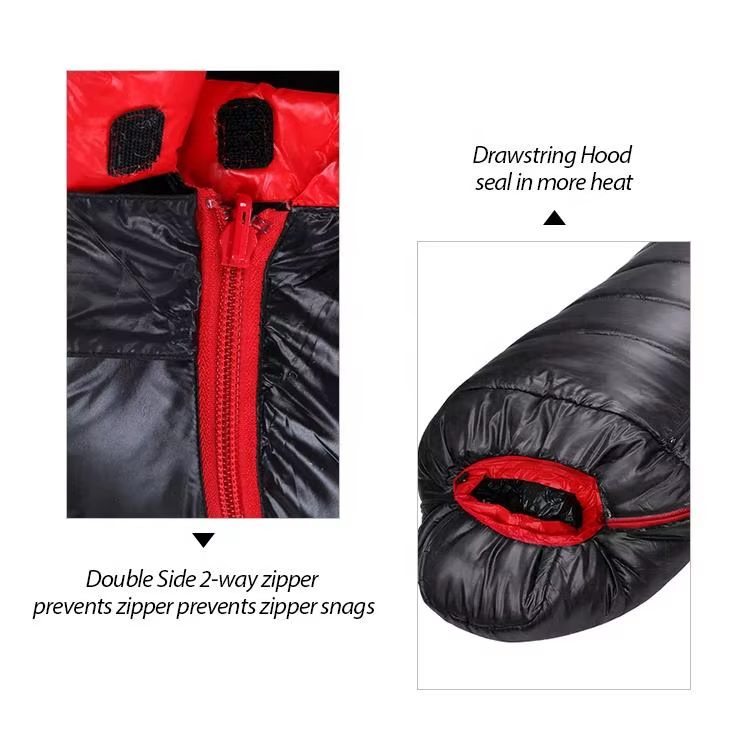
    The adjustable hood draws the opening closer around the head, while the neck and zipper-side structure helps reduce cold air entering the bag. When temperatures fall after midnight or cool air moves around the tent before sunrise, the head, shoulders, and upper body remain more fully enclosed for fewer cold interruptions.
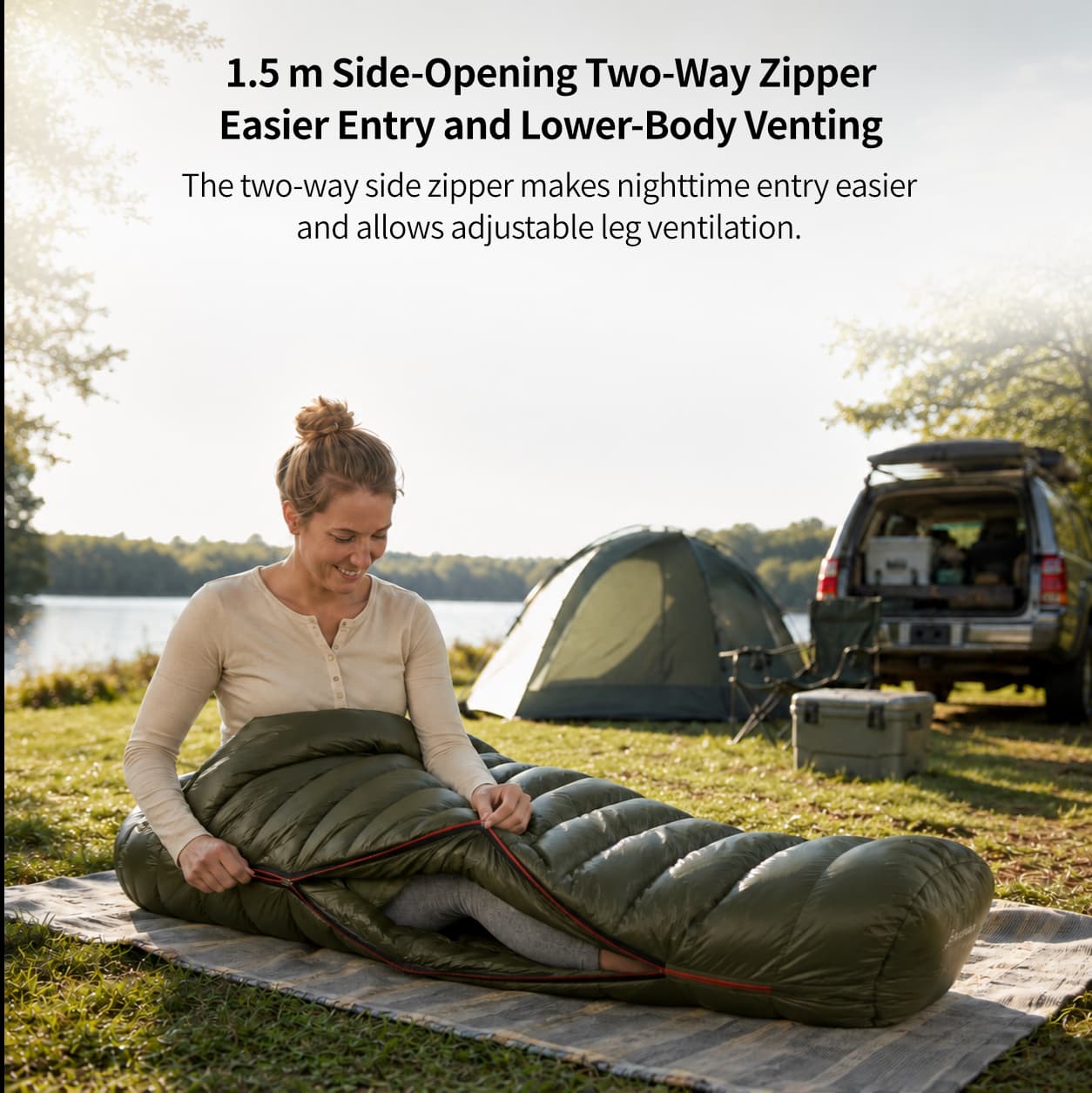
  • 1.5 m Side-Opening Two-Way Zipper, Easier Entry and Lower-Body Venting
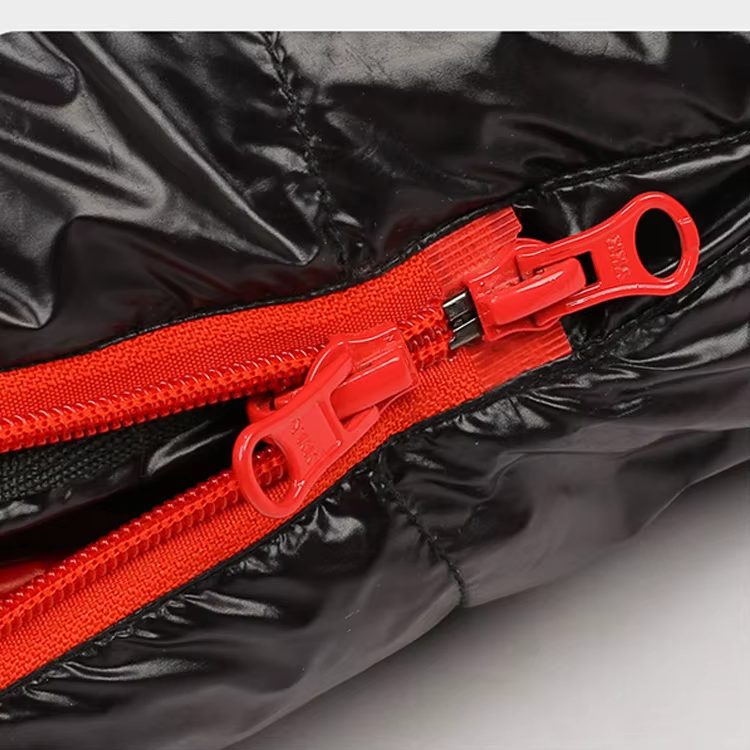
    The 1.5 m (59.1 in) two-way YKK zipper opens along the side for easier nighttime entry and can be adjusted from the lower end to release excess heat around the legs. As temperatures change through the night, the opening can be adjusted gradually while the enclosed foot area remains covered.
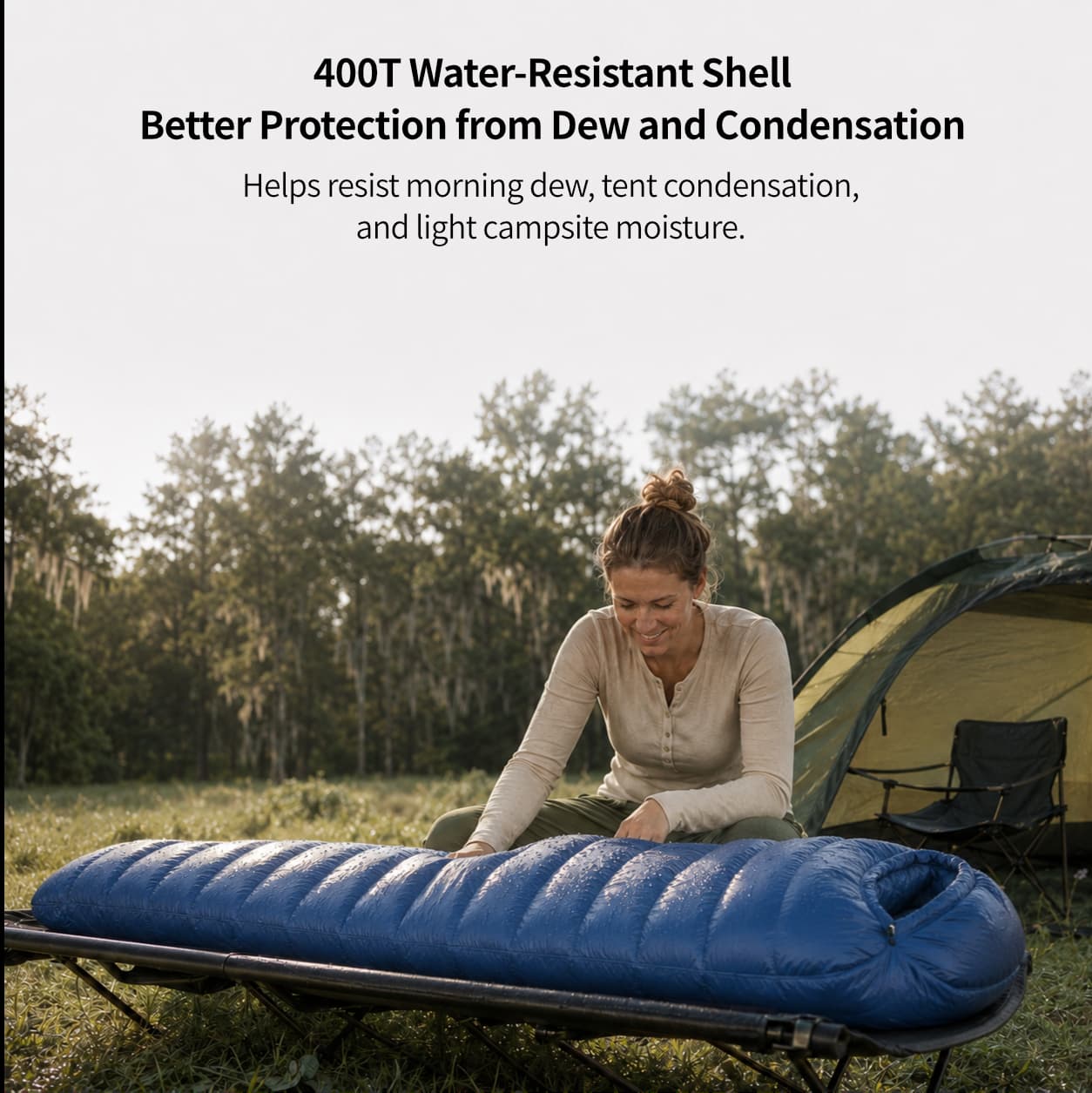
  • 400T Water-Resistant Shell, Better Protection from Dew and Condensation
    The 400T outer shell helps handle morning dew, tent-wall condensation, and light campsite moisture before it reaches the insulation inside. At lakeside, forest, or high-humidity campsites, the sleeping bag is better prepared for the damp conditions that often develop overnight.
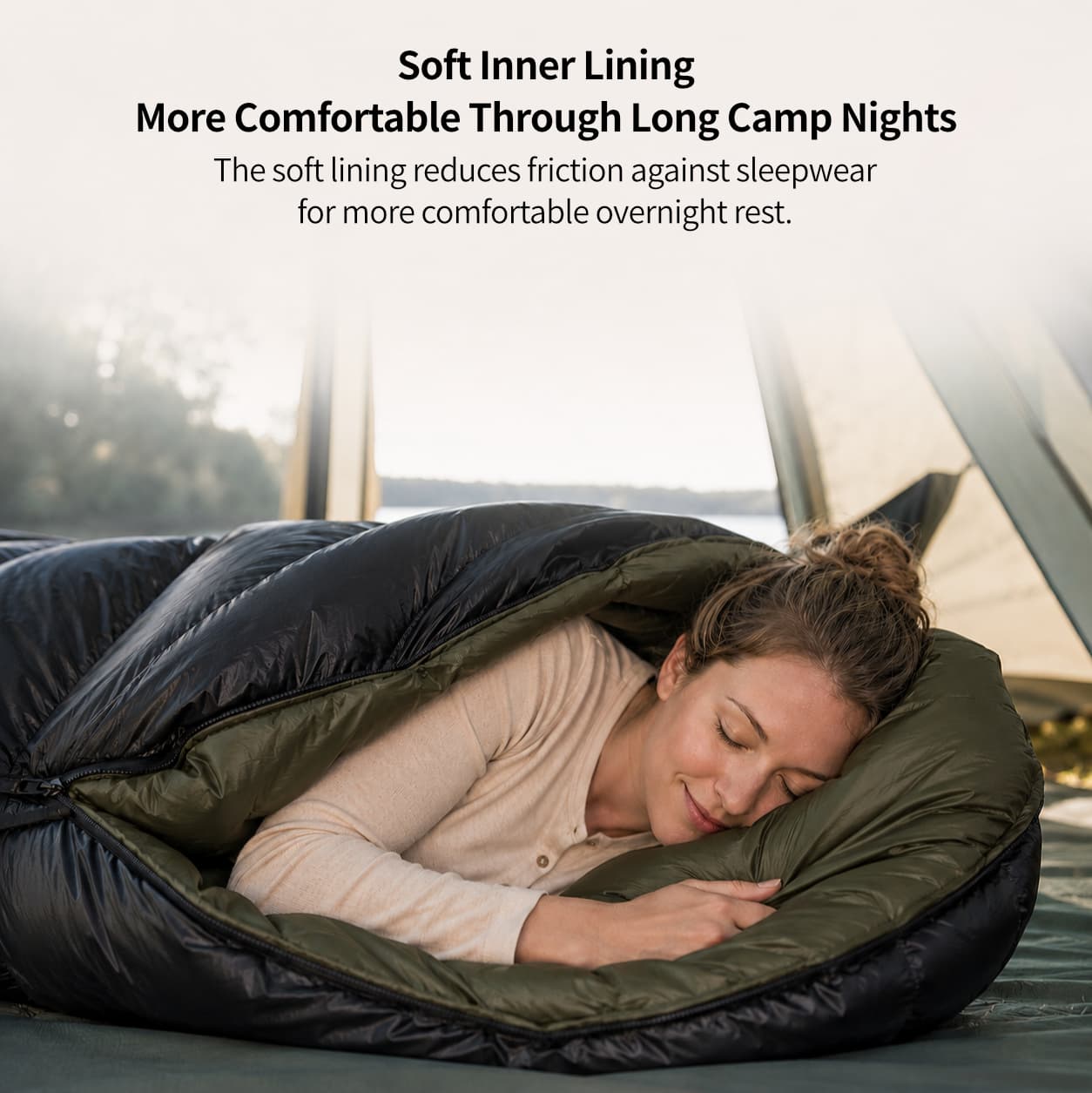
  • Soft Inner Lining, More Comfortable Through Long Camp Nights
    The soft inner surface rests gently against sleepwear and base layers, reducing the rough friction that can become noticeable while turning during the night. After a full day of hiking, driving, or setting up camp, the interior creates a more relaxing place to settle in and recover.
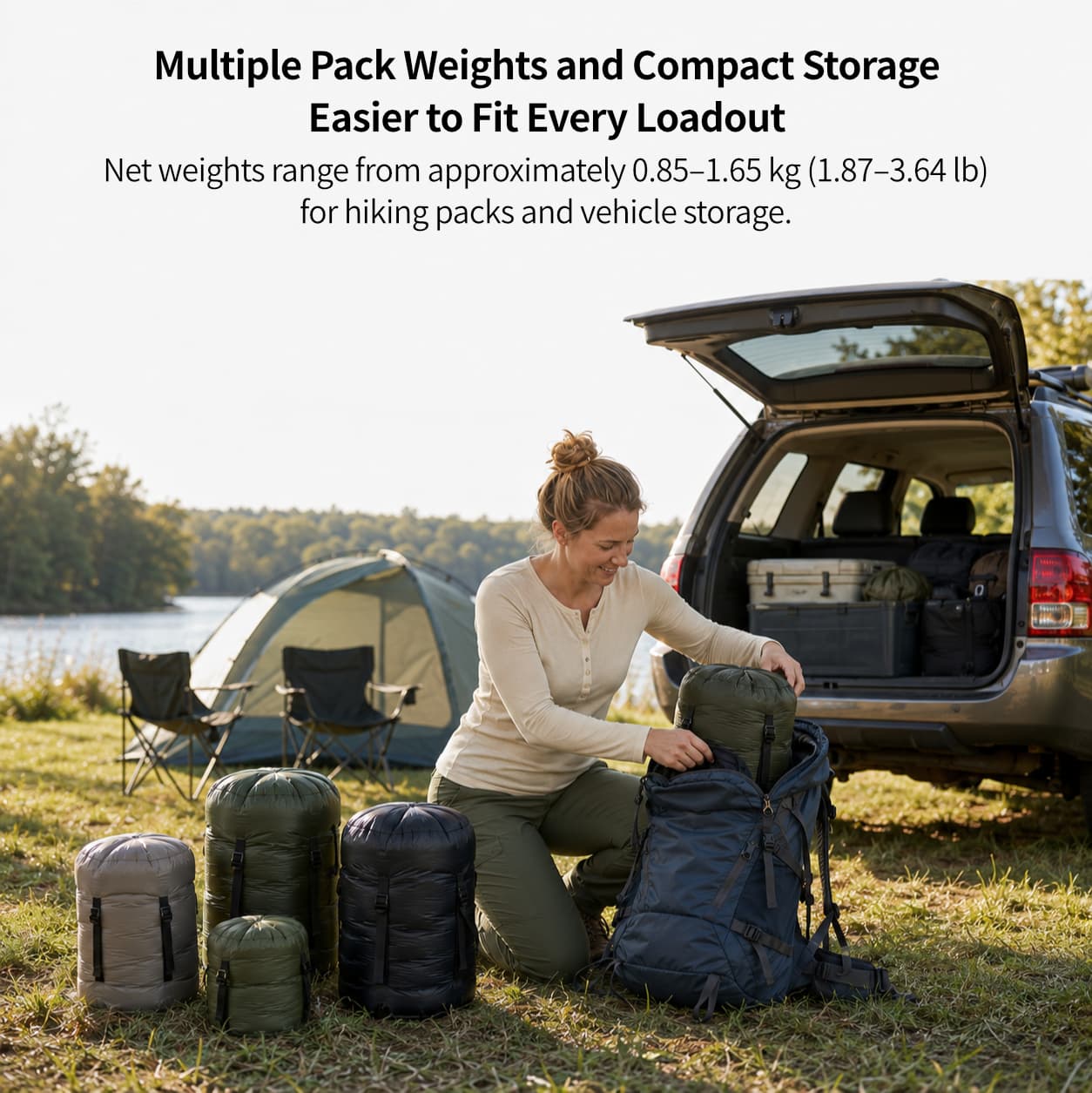
  • Multiple Pack Weights and Compact Storage, Easier to Fit Every Loadout
    Depending on the selected fill, the sleeping bag weighs approximately 0.85–1.65 kg (1.87–3.64 lb) and compresses to about 18 × 21 cm through 21 × 29 cm (7.1 × 8.3 in through 8.3 × 11.4 in). Lighter options fit naturally into a hiking pack, while higher-fill versions store neatly in a camping gear bag or vehicle trunk.
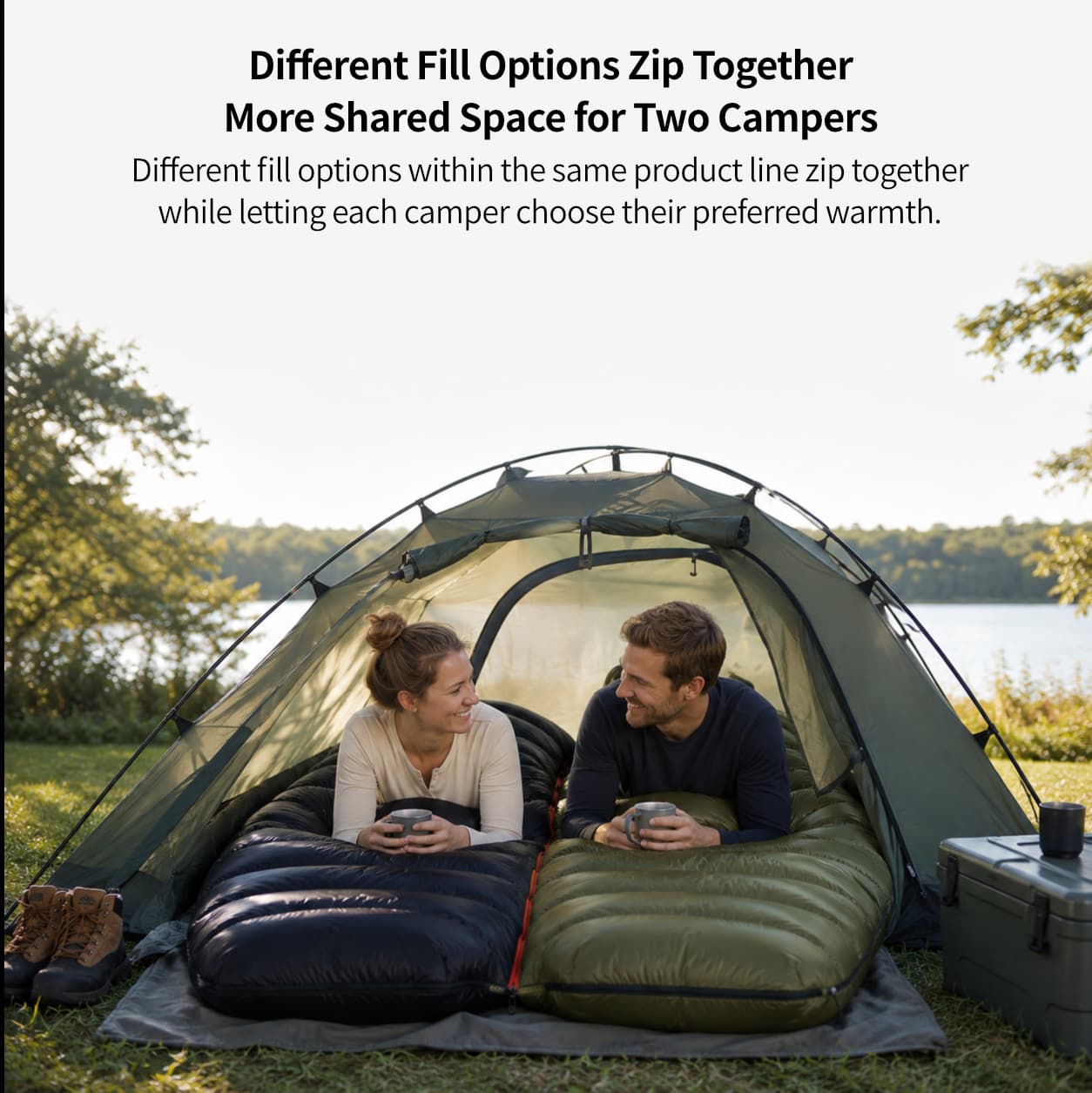
  • Different Fill Options Zip Together, More Shared Space for Two Campers
    Different fill options within the same product line can zip together along the side to create a wider shared sleeping space. Couples and two-person campers can choose different fill weights based on their individual warmth needs, while the joined setup retains the enclosed lower structure of the sleeping bags.
Parameters
  • Product Type: Down Mummy Sleeping Bag
  • Shape: Roomier Mummy Shape
  • Open Size: 210 × 80 × 50 cm (82.7 × 31.5 × 19.7 in)
  • Insulation: Down Fill
  • Fill Weight Options: 400 g (14.1 oz), 600 g (21.2 oz), 800 g (28.2 oz), 1000 g (35.3 oz), and 1200 g (42.3 oz)
  • Net Weight:
    400 g option: Approx. 0.85 kg (1.87 lb)
    600 g option: Approx. 1.05 kg (2.31 lb)
    800 g option: Approx. 1.25 kg (2.76 lb)
    1000 g option: Approx. 1.45 kg (3.20 lb)
    1200 g option: Approx. 1.65 kg (3.64 lb)
  • Temperature Performance:
    400 g option: Comfort temperature 20°C (68°F), intermediate temperature reference 15°C (59°F), lower limit 7°C (45°F)
    600 g option: Comfort temperature 15°C (59°F), intermediate temperature reference 10°C (50°F), lower limit 5°C (41°F)
    800 g option: Comfort temperature 10°C (50°F), intermediate temperature reference 5°C (41°F), lower limit 0°C (32°F)
    1000 g option: Comfort temperature 5°C (41°F), intermediate temperature reference 0°C (32°F), lower limit −5°C (23°F)
    1200 g option: Comfort temperature 0°C (32°F), intermediate temperature reference −5°C (23°F), lower limit −13°C (9°F)
    Temperature Note: Comfort temperature should be the primary reference when choosing a sleeping bag for normal overnight use. The intermediate temperature provides an additional reference as warmth requirements increase. The lower limit is a laboratory-tested low-temperature reference and does not represent comfortable sleep at that temperature. Actual warmth varies with cold sensitivity, clothing, sleeping-pad R-value, shelter, wind, and humidity.
  • Outer Shell: 400T Water-Resistant Nylon
  • Hood: Adjustable Hood
  • Zipper: 1.5 m (59.1 in) Two-Way YKK Side Zipper
  • Approx. Compressed Size: 18 × 21 cm to 21 × 29 cm (7.1 × 8.3 in to 8.3 × 11.4 in), depending on the selected fill option.
  • Opening Structure: Partial side-opening design; the sleeping bag does not open completely flat
  • Zip-Together Configuration: Different fill options within the same product line can zip together to create a shared two-person sleeping space
  • Available Colors: Red, Dark Blue, Blue, Black, Lake Blue, Wine Red, Orange-Yellow, Gray, and Army Green

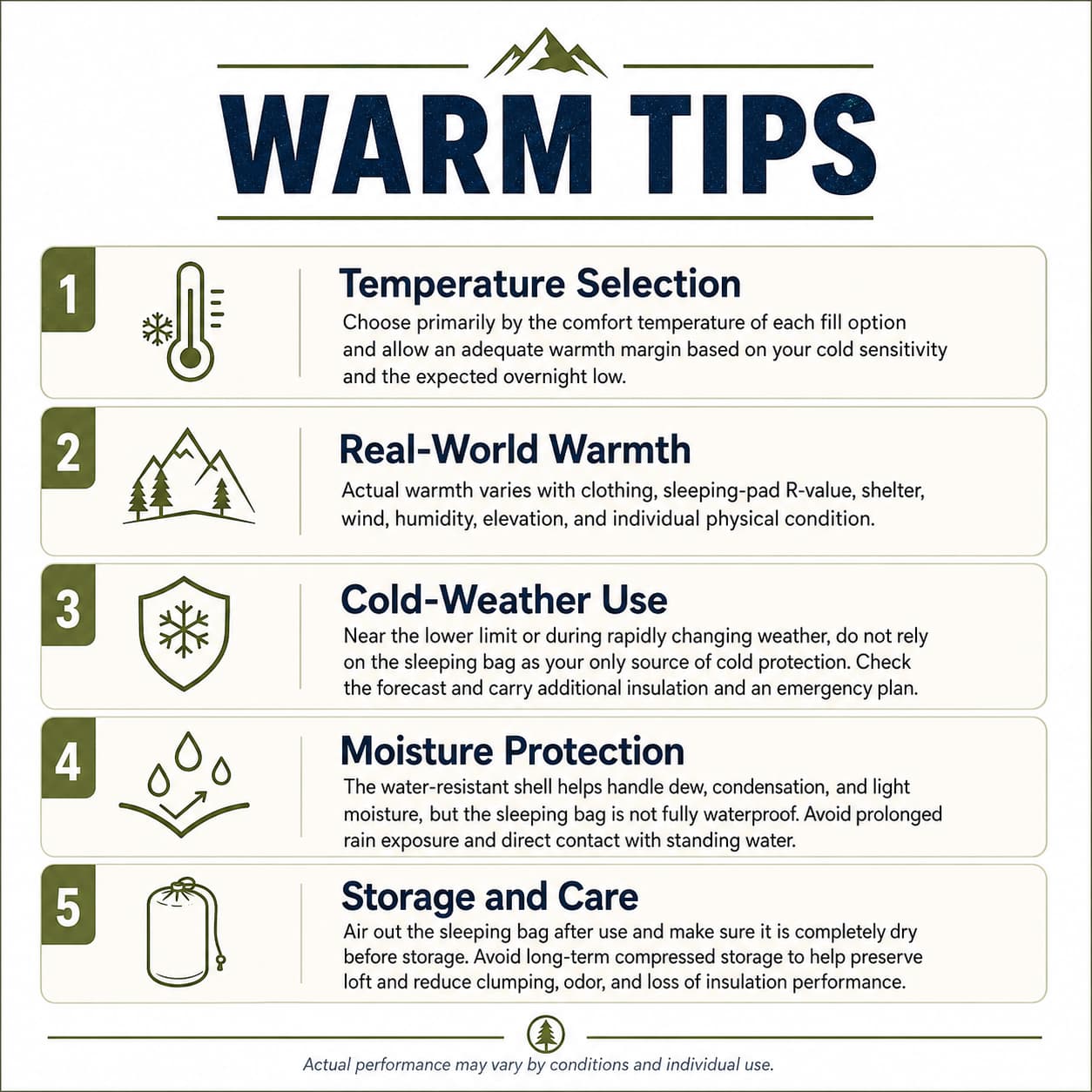
Warm Tips

  • Temperature Selection: Choose primarily by the comfort temperature of each fill option and allow an adequate warmth margin based on your cold sensitivity and the expected overnight low.
  • Real-World Warmth: Actual warmth varies with clothing, sleeping-pad R-value, shelter, wind, humidity, elevation, and individual physical condition.
  • Cold-Weather Use: Near the lower limit or during rapidly changing weather, do not rely on the sleeping bag as your only source of cold protection. Check the forecast and carry additional insulation and an emergency plan.
  • Moisture Protection: The water-resistant shell helps handle dew, condensation, and light moisture, but the sleeping bag is not fully waterproof. Avoid prolonged rain exposure and direct contact with standing water.
  • Storage and Care: Air out the sleeping bag after use and make sure it is completely dry before storage. Avoid long-term compressed storage to help preserve loft and reduce clumping, odor, and loss of insulation performance.

FAQs

How do I choose between the 400 g, 600 g, 800 g, 1000 g, and 1200 g fill options?

Choose the 400 g option for warm summer nights, lightweight hiking, and early-fall trips. The 600 g option balances pack weight and warmth for spring and fall weekends. The 800 g option suits cooler weather and regular tent camping, while the 1000 g option is better for cold nights near freezing, car camping, and fixed camps. Choose the 1200 g option for lower temperatures or higher personal warmth needs. When expected nighttime temperatures fall between two options, consider choosing the higher fill based on your cold sensitivity and sleeping-pad insulation.

What is the difference between comfort temperature and lower limit?

Comfort temperature is the more useful reference when selecting a sleeping bag for normal overnight use. The lower limit is a laboratory-tested low-temperature reference. The 1200 g option has a lower limit of −13°C (9°F), but this does not mean comfortable sleep at that temperature. Actual warmth also depends on cold sensitivity, clothing, sleeping-pad R-value, shelter, wind, and humidity.

Is the down sleeping bag waterproof?

The 400T water-resistant shell helps handle morning dew, tent condensation, and light campsite moisture, but the sleeping bag is not fully waterproof. Avoid prolonged rain exposure, standing water, or wet conditions without reliable shelter, and dry the sleeping bag thoroughly if it becomes damp.

Can different fill options be zipped together, and does the bag open completely flat?

Yes. Different fill options within the same product line can zip together to create a wider two-person sleeping space for couples or shared camping. A single sleeping bag does not open completely flat into a quilt, and the joined setup retains the enclosed sleeping-bag structure.