

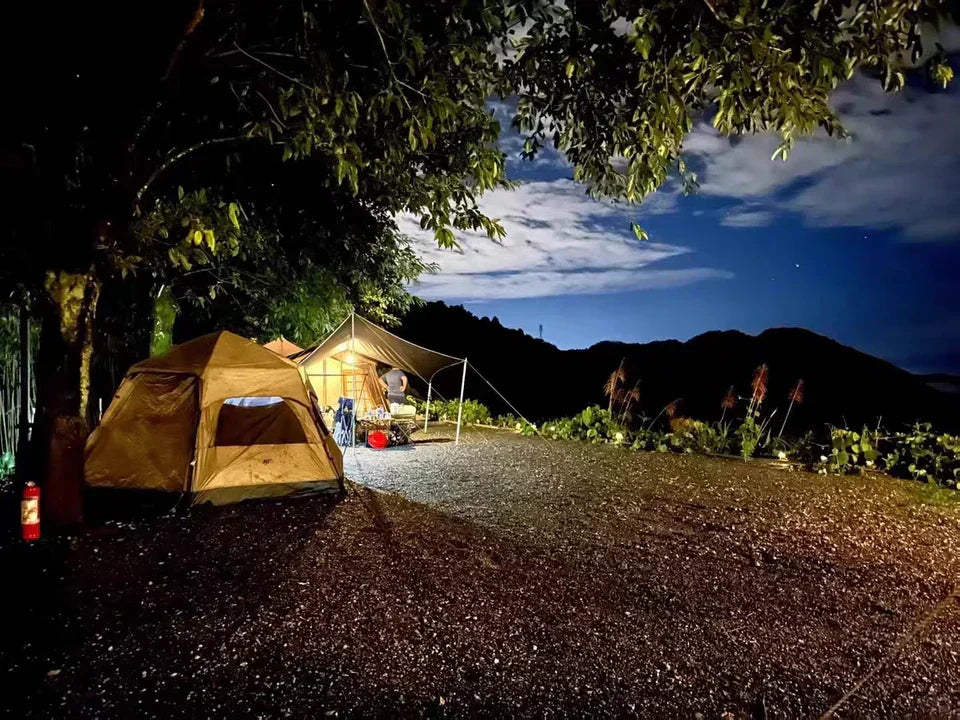
(Field-tested insights informed by real-world outdoor use and ANSI/NEMA FL 1 performance standards.)
After over a decade of leading expeditions through remote wilderness and rugged terrain, I’ve seen countless novices struggle with gear failures. The most common mistake? Buying a light based solely on "marketed lumens" or trying to use a tactical flashlight as a primary campsite light.
In the wild, light is more than just a convenience for finding your gear—it is your final line of psychological defense and your primary safety net. Today, I’m stripping away the marketing jargon to share my "Golden Rules" for selecting a camping flood light that actually performs when it counts, based on ANSI/NEMA FL 1 standards and years of field testing.

1. The Guide’s "Pitfall Warning": Three Real-World Mistakes
Before you buy, ask yourself if you are falling for these common industry traps:
-
The "Tunnel Vision" Trap: Many beginners carry high-intensity flashlights with beam distances of 500+ meters. Because the beam angle is so narrow (often <30°), they create a high-contrast "tunnel" effect—blindingly bright in the center and pitch black on the sides. This destroys your depth perception when performing fine tasks like cooking or setting up tent stakes.
-
The "CRI Crisis": Cheap LEDs often sacrifice the Color Rendering Index (CRI/Ra) for raw brightness. In the wild, poor CRI means you can’t tell if your meat is cooked through, or worse, you struggle to identify the severity of a wound during a medical emergency because colors appear grey or distorted.
-
The "Lumen Drop-off" Illusion: The market is flooded with lights claiming 2000+ lumens that lack proper thermal management. Within five minutes, they trigger a "thermal step-down," plummeting to 10% of their advertised brightness. You need constant-current output, not a momentary burst.

2. Professional Selection Criteria: The Four-Dimensional Model
A. Surface Source Technology: From "Point" to "Plane"
-
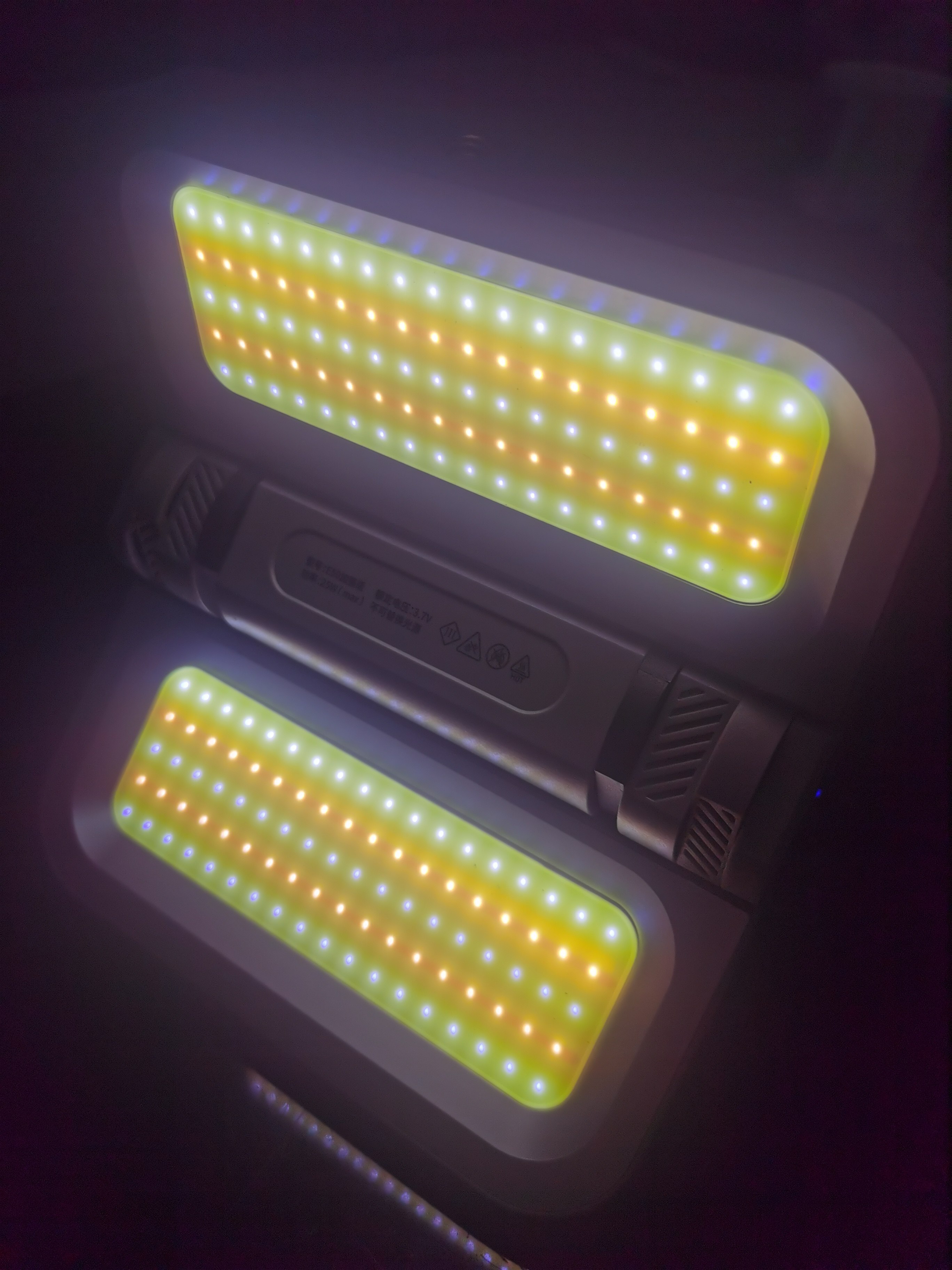
Technical Standard: Look for COB (Chip on Board) packaging. Unlike traditional SMD LEDs, COB provides a much more uniform light distribution.
-
Guide’s Pick: The Traverseon model I’ve been testing integrates 180 micro-LEDs. Its 2400-lumen output mimics natural ambient light rather than a harsh beam, illuminating roughly 160m²—essential for group campsite management.
B. Light Management: The Geometry of Dual-Wing Design
Fixed-angle lighting is frustratingly limited in the field.
-
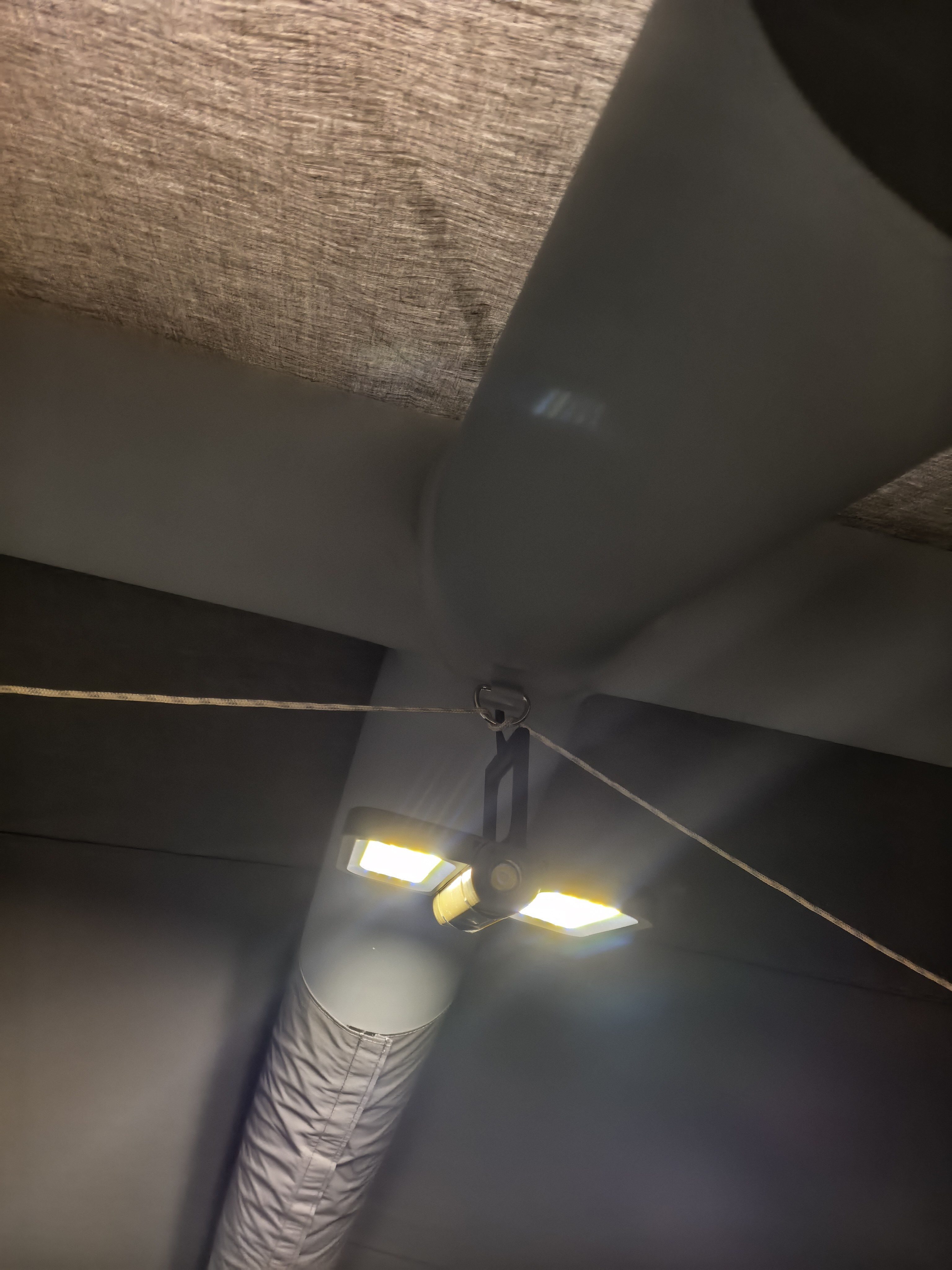
Field Tip: Look for multi-axis adjustability. A dual-hinge design (like the 220° system on the Traverseon) allows you to point one panel down for kitchen work while angling the other up toward your tarp or tent ceiling. This creates "Bounce Lighting," providing a soft, studio-quality glow that is much easier on the eyes.
C. Spectral Psychology: Biology and Bug Prevention
-
3000K Warm Yellow: Warm light has a longer wavelength that penetrates rain and fog more effectively. More importantly, it is roughly 60% less attractive to phototactic insects compared to cool white light.
-
5000K-7000K Cool White: Save this for high-contrast needs, such as gear repairs or medical first aid.
3. Hardware Reliability: The Data Behind Survival
To understand the gap between professional gear and consumer-grade toys, look at these specific metrics:
|
Key Metric |
Standard Consumer Grade |
Professional Grade (e.g., Traverseon) |
Field Impact |
|
Power Core |
18650 Li-ion |
5000mAh 21700 Li-ion |
35% higher energy density; stable discharge in cold. |
|
Color Rendering (Ra) |
< 70 (Color distortion) |
Ra > 80 (High Fidelity) |
Natural color representation; reduced eye strain. |
|
Heat Dissipation |
Sealed plastic casing |
Conductive Materials + Grille |
Maintains 2400LM output without immediate step-down. |
|
Weight-to-Light Ratio |
> 1.5g / Lumen |
~0.14g / Lumen (330g total) |
Extreme portability for UL (ultralight) hiking. |
|
Mounting Versatility |
Single hook |
Magnetic/Hanging/Standing/Tripod |
Adapts to 99% of terrains and vehicle repairs. |
4. Redundancy and All-Weather Protection
In off-grid environments, reliability is the only currency that matters:
-
Impact Resistance: Professional gear must survive the "drop test." Reinforced ABS housing that can withstand a 1-meter drop onto rocky terrain is non-negotiable.
-
The Bottom-Line Backup: While solar panels on small devices have limited charging speeds, they serve as a critical "Level 0" backup. In a multi-week survival scenario, having enough power for even one hour of reading or navigation per day is a massive psychological advantage.

5. Pro-Maintenance: Ensuring Long-Term Reliability
-
Thermal Etiquette: High-output modes generate heat. Ensure the cooling grilles are unobstructed and never turn the light on while it’s inside a bag.
-
Chemical Defense: Campfire smoke, salt spray, and even sunscreen can chemically etch the COB surface. Clean the lens with a dedicated optical cloth after every trip to prevent Luminous Flux degradation.
-
State of Charge (SoC): Never store your light completely empty. If you aren't using it for a month, keep the battery at 60%-80% SoC to maintain chemical health.
Conclusion: Let Light Be Your Most Reliable "Teammate"
Camping is not just about sleeping outdoors; it’s about bringing the order of civilization into the wild with intention. The right flood light gives you a sense of control over your environment when the sun goes down.

If you are looking for a tool that meets senior guide standards—balancing professional tasks, social camp vibes, and emergency roadside repairs—the Traverseon 2400LM Flood Light is currently at the top of my recommendation list. No gimmicks, just steady, reliable brightness when you need it most.
FAQ: Expert Insights for Professional Camping Lighting
Q1: Why is the Color Rendering Index (CRI) more critical than Lumens when choosing a campsite light?
A: This is a classic distinction between "marketing specs" and "field utility." While Lumens measure raw brightness, CRI determines how accurately you see colors. In scenarios like emergency first aid or judging if food is properly cooked, a low CRI causes color distortion (making things look grey or "off"), increasing the risk of misjudgment. As a lead guide, I recommend professional-grade gear with Ra > 80 to significantly reduce eye strain during extended use.
Q2: Is 2400 Lumens "overkill" for a standard camping setup?
A: It’s not about the total brightness; it’s about "Light Management." Using a dual-wing design like the Traverseon allows you to physically split that 2400-lumen output. You can aim one wing at your workspace and the other toward a canopy for reflected light, achieving uniform 160m² illumination. This creates a soft "planar light source" rather than the harsh, blinding glare typical of traditional high-lumen flashlights.

Q3: Why do experts prefer 3000K warm light over "brighter" cool white light?
A: There is both physical and biological logic here. Physically, long-wavelength warm yellow light penetrates rain and fog much better. Biologically, 3000K warm light attracts approximately 60% fewer phototactic insects than cool white light. Except for high-contrast needs like engine repairs or medical emergencies, campsite life should always prioritize warm light for comfort and stealth.
Q4: Is the dual-wing folding design actually durable in harsh environments?
A: People often worry about moving parts failing. However, professional gear built to ANSI/NEMA FL 1 standards uses reinforced ABS housing capable of surviving 1-meter drops onto rock. The 220° adjustable system isn't just for light distribution; it’s designed for stability on uneven terrain—like propping it inside a hood for repairs or wedging it into a rock crevice.
Q5: Is a built-in solar panel actually useful in an emergency?
A: To be clear, small solar panels are not a primary power source. However, in multi-week off-grid scenarios or extreme survival situations, they serve as your "Level 0 Backup." Even if it only provides enough power for one hour of navigation or reading per day, that functional redundancy and psychological security are vital components of survival logic.
Q6: How can I maximize the battery life of high-power outdoor lighting?
A: Follow three golden rules: First, never turn on high-power modes while the light is inside a storage bag to prevent heat buildup from damaging the circuits. Second, always wipe the COB surface with an optical cloth after a trip to remove salt spray or sunscreen residue, which can corrode lens coatings. Finally, store the device at 60%-80% charge during the off-season to prevent permanent capacity loss from deep discharge.
Note: This guide reflects the author’s real-world experience and professional judgment, informed by standardized ANSI/NEMA FL 1 performance metrics. It is intended for general informational purposes, and actual performance may vary depending on usage and environment.
About the Author
Johann is a seasoned outdoor expedition leader and professional gear reviewer. She is dedicated to exploring the logic of survival equipment in extreme environments and strongly advocates for a “field-tested” approach. By sharing objective and professional insights, she helps outdoor adventurers make more rational gear decisions in the dark, enabling them to enjoy safe and free exploration in the wild.
Share:
How to Choose a One Person Tent for Solo Camping (Simple Checklist)
Tired of Rooftop Tents? Why More Overlanders Are Switching to Interior SUV Sleeping Platforms